
Throughout history, people have created waste not just as leftovers, but as evidence of their changing lifestyles. Growth, consumption, and change are evident in the things that are thrown away. In Asia, where rapid industrial growth coexists with enduring traditions, dealing with waste is as much about money as it is about values. Growing urban centers and growing populations mean that more and more discarded items are piling up over time. From another perspective, the pile might seem like a possibility waiting to be reshaped.
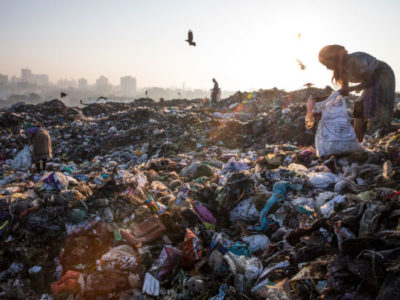
In recent decades, growing cities across Asia have transformed the way waste is handled. As factories have expanded, so have piles of urban and construction waste – yet policies for reuse have often lagged behind. While Japan and South Korea developed strong recycling practices after wartime shortages, their systems reflect long-standing traditions of frugality. Meanwhile, countries like Indonesia, Vietnam, and India are blending official schemes with sprawling underground networks. These informal workers who sort trash – millions of them – earn a living wage amid irregular collection routes. Progress is moving at different speeds.
Despite the progress, Asia’s waste management presents a paradoxical reality – jobs and innovative solutions are being created alongside environmental damage. Where official systems fail, informal workers step in, sorting and recovering what others overlook. Meanwhile, new rules and tools are gradually changing perceptions of value. Materials like plastic, glass, and metal are now being recycled after initially being discarded. Yet construction-related waste does not follow the same path. As cities renew themselves, piles of concrete, broken pieces from tiling works, and ceramic shards pile up. Such leftovers reveal how deeply ingrained waste habits are ingrained in development patterns.
Waste turned resource in circular systems
In today’s economic thinking, waste does not mean worthlessness – it means unused energy. The circular model, which originated in Japan and later spread to China and then the European Union, is based on this idea. Resources should continue to flow through systems, rather than lying idle. Progress is evident in how thoughtfully things are reused rather than how much is produced.
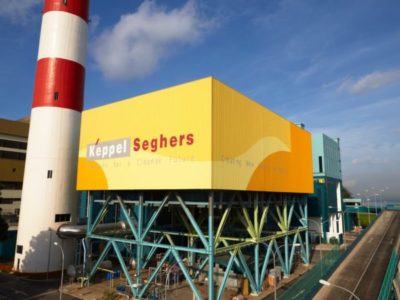
In some parts of Asia, this idea is slowly taking shape. Take Singapore: its approach to dealing with waste has changed after the National Environment Agency introduced a ‘Zero Waste Masterplan’, which places a high emphasis on recycling and reducing energy waste. What makes it unique is how things are handled, rather than the quantity – public rules, industry choices and everyday habits come together seamlessly. Throwing away an item becomes a moment of personal responsibility. Even everyday activities, such as house movers, now fit into a shared commitment to managing resources wisely.
In Japan, waste has a meaning; it is shaped by ‘mottainai’, the uncomfortable feeling of disposing of things too quickly. Because of this attitude, careful technology works together with shared customs to recover what others might throw away. Factories produce leftovers, but this waste is recycled into building rubble. From food waste and spoiled crops, usable energy quietly emerges. Here, deeper awareness is more important than profit: handling things carefully, even if they are invisible systems, shows respect for people’s labor.
Governance and the Moral Dimension
Waste management is about more than rules or punishment. Across Asia, the concept leans more toward stewardship than control. Decisions around waste are closely tied to how space is used, how social good is understood, and what communities believe they owe one another. Designing systems to collect, reuse, or dispose of waste changes how people relate to the environment in ethical terms.
Landfill taxes, extended producer responsibility schemes, and deposit-return systems are now widely used across countries. These tools are familiar. Yet policies guided only by financial incentives tend to overlook deeper social conditions. How well waste systems function is closely tied to whether people feel they are being treated fairly. Where transparency informs decision-making, cooperation tends to follow without coercion. When fairness is visible, effort is sustained. Where processes appear opaque or uneven, resistance emerges quickly. In practice, trust matters more than punishment.
Across Asia, progress often depends on how formal systems and local initiative interact. Where larger institutions struggle to adapt, smaller actors such as cooperatives, neighbourhood businesses, and informal recycling networks continue to operate and evolve. Strength, in many cases, does not come from central control alone, but from balance. National frameworks provide direction. Local communities respond in ways that reflect immediate conditions. This pattern is not new. In Japan and South Korea, elements of decentralised coordination have long been embedded within governance structures. Rather than weakening order, such arrangements tend to reinforce it through distributed responsibility.
Waste and the Beauty of Starting Over
Dealing with waste is not only about cost or environmental impact. It also involves questions of form, meaning, and identity. In many parts of Asia, discarded materials are being reinterpreted through design practices that emphasise continuity rather than disposal. Former industrial spaces are repurposed. Building components are reused. Urban layouts are adjusted with greater attention to existing materials. These shifts are gradual, but they indicate a change in how value is understood.
Design, in this sense, takes on a quiet ethical dimension. When architects choose aged wood or imperfect materials, the decision is not only economic. It reflects a different relationship with use and time. These materials carry traces of prior use. Their presence alters how spaces are experienced. Sustainability, then, emerges less as a requirement and more as a consequence of changing priorities.
From this perspective, waste becomes a way of examining how culture shapes production and reuse. Value is not expressed only in monetary terms or emissions reductions. It develops through habits that recognise continuity and restraint. What was once treated as an endpoint begins to take on a different role. Materials re-enter circulation. Processes extend.
Nowhere is this shift more visible than in parts of Asia where urban growth continues to accelerate. Cities expand. Markets deepen. The movement of goods increases year by year. Whether a shared direction will emerge remains uncertain. Progress depends on how institutions respond to these pressures. If financial systems begin to account for environmental limits, discarded materials may be understood differently, not as excess, but as part of a longer cycle of use.
Taxes on landfills, rules holding producers accountable, along with refund programs for returns – these tools appear often across nations today. Still, steering policy only by money misses deeper needs. How well trash systems work ties closely to whether people believe they’re treated fairly. When openness shapes decisions, cooperation tends to rise without force. Fairness seen means effort given. If processes feel hidden or unjust, pushback appears quickly instead. Trust matters more than penalties ever can.
Starting differently each time, Asia moves ahead when rules meet grassroots effort. Where big systems lag, small groups like local co-ops, tiny businesses, and street-level reuse projects keep going. Strength often comes not from top-down control, yet from balance – national goals paired with self-run communities. This mix isn’t new; Japan and Korea built it quietly into their way of managing regions. Far from weakening order, spreading power out acts like roots: unseen, widespread, holding things together.